
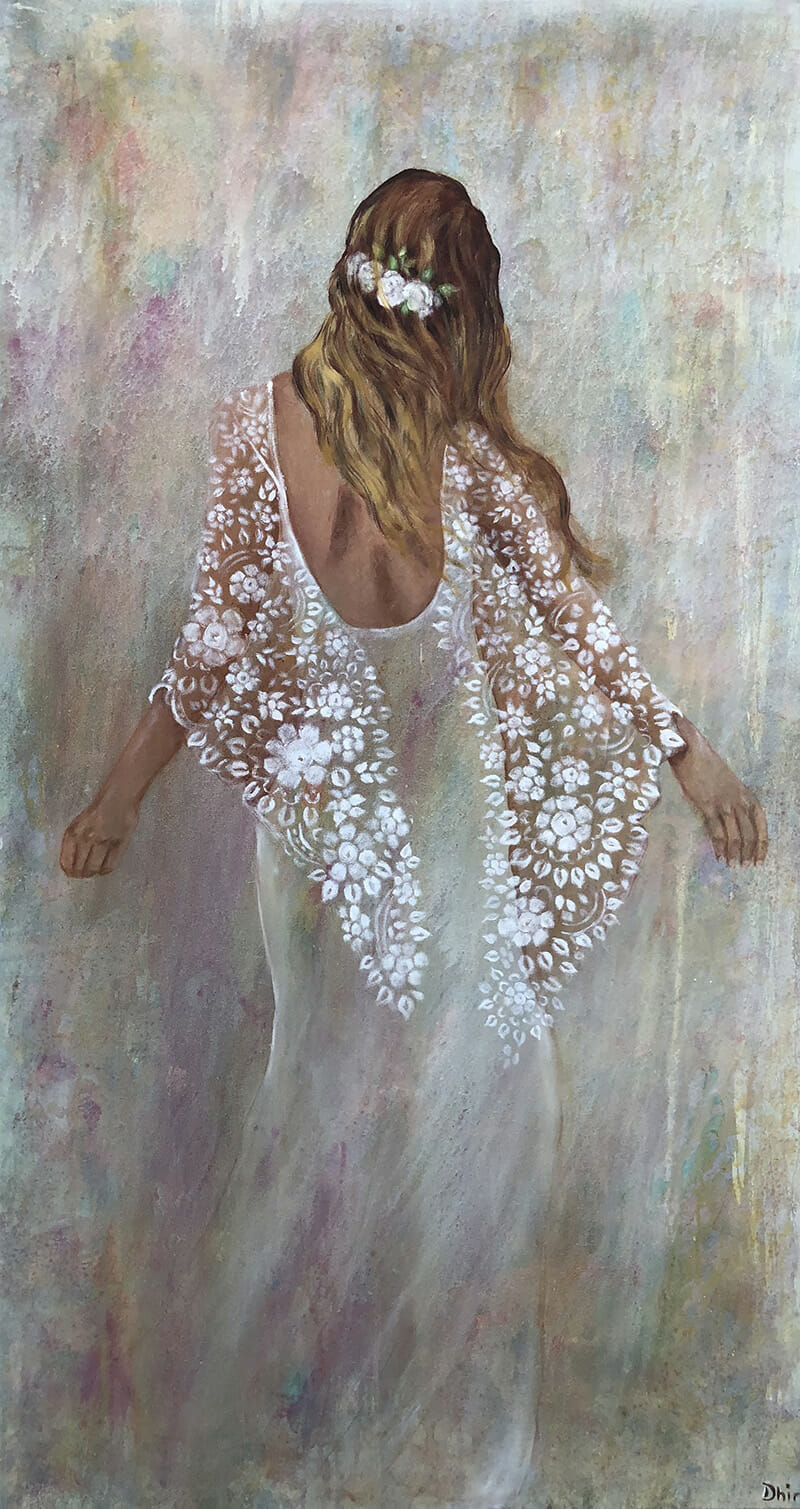
soheila (die Frau ohne Gesicht)
Mischtechnik auf Leinwand 85×153
2019
Das Gemälde zeigt eine, wie man als Betrachter erstmal annimmt wunderschöne Frau, jedoch bleibt im verborgenen und lässt Raum für Interpretationen wie sie von vorne aussieht. Im Iran gibt es immer wieder Proteste von Erzkonservativen, die eine Sittenverrohung beklagen. Sie treten für eine strengere Umsetzung der Kleidervorschriften für Frauen ein.In vielen Islamischen Ländern müssen Frauen ihr Haar bedecken, ihr Gesicht verschleiern und weite Kleidung tragen, somit soll ihre Schönheit verborgen bleiben und nur Ihren Männern zuteil werden. Die 27 jährige Journalistin Soheila startete eine online Kampagne gegen die Schleierpflicht und wurde in Isfahan das Opfer eines Säure Angriffes welches ihr Gesicht, ihr Hals und Ihre Beine verätzte, auf dem einen Auge wurde sie blind. Das passiert auch in Ländern wie Indien Afghanistan und Pakistan. Der Parlamentarier hingegen unterstützt die Frauen nicht, er glaubt an eine Verschwörungstheorie. Einen politischen Hintergrund solle man darin nicht sehen, die Attacken hätten nichts mit mangelhafter Verschleierung zutun, ohne jedoch zu erklären wie er zu diesem Schluss kommt.